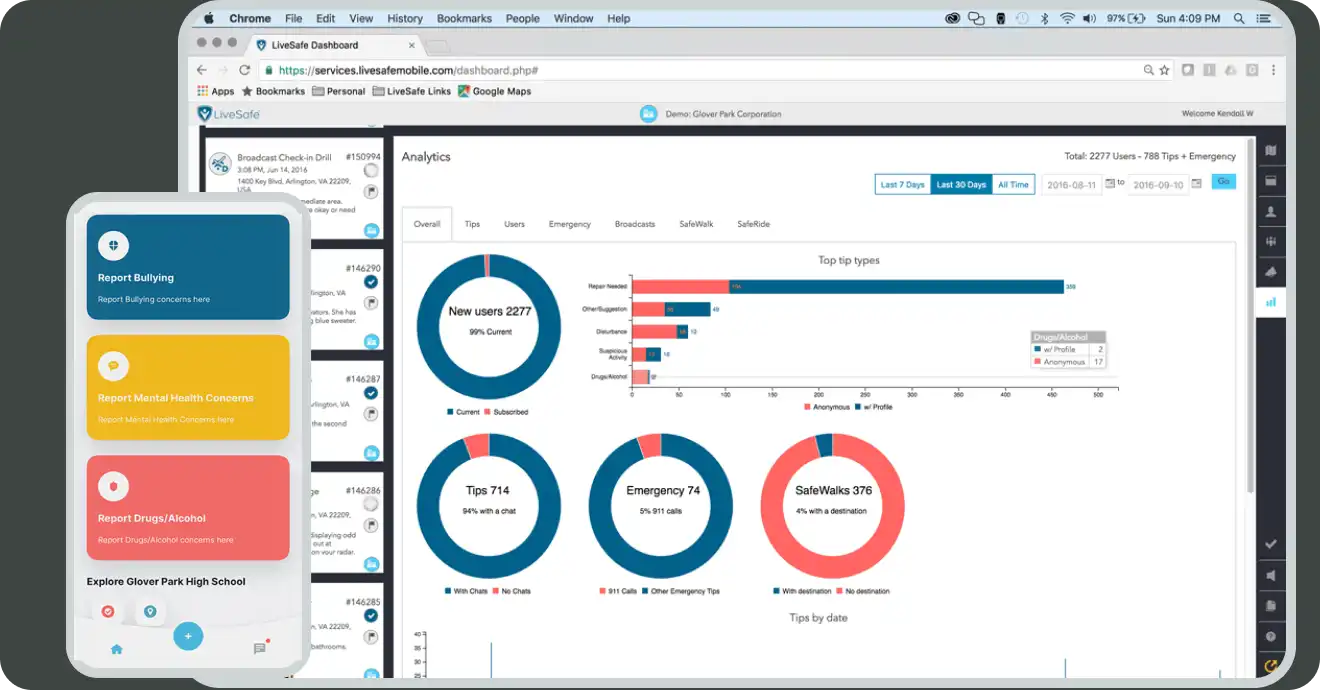
The Shift to Data-Driven Campus Safety
Campus safety is no longer just about responding to incidents as they occur. For executive leaders and risk professionals, the focus has shifted toward understanding risk, identifying patterns, and making proactive decisions that improve safety outcomes over time. Campus risk management software enables this shift by turning fragmented data into a centralized, actionable intelligence system.
Aggregating Data Across the Campus Ecosystem
Modern campus environments generate large volumes of safety-related data, from incident reports and alerts to user activity and communication logs. Without a centralized system, this data remains siloed and underutilized.
Campus risk management platforms bring this information together into a single environment, allowing leadership to view a comprehensive picture of campus safety. By aggregating data across multiple sources, institutions gain the visibility needed to understand both individual incidents and broader trends.
Identifying Trends and Emerging Risks
One of the most valuable capabilities of these platforms is trend analysis. By examining patterns over time, institutions can identify emerging risks before they escalate into larger issues.
For example, leadership may detect increases in specific types of incidents, recurring issues in certain locations, or shifts in behavior across the campus community. These insights allow for earlier intervention and more targeted prevention strategies.
Want to see how campuses are identifying risks before they escalate?
Explore how it works
Custom Dashboards and Risk Visibility
Custom dashboards provide executives and risk professionals with real-time visibility into key safety metrics. Instead of relying on static reports, leaders can monitor activity as it happens and quickly assess the current risk landscape.
These dashboards can be tailored to highlight the most relevant data points, ensuring that decision-makers have immediate access to the information that matters most.
Benchmarking and Institutional Comparison
Another important capability is benchmarking. By comparing data across similar institutions, organizations can better understand how their safety performance aligns with peers.
This context helps leaders identify areas of strength as well as opportunities for improvement. It also supports more informed decision-making when evaluating policies, investments, and resource allocation.
Operational and Strategic Benefits
From both an operational and strategic standpoint, campus risk management software delivers measurable value.
Key benefits include:
- Data-driven decision making across safety and compliance initiatives
- Improved allocation of personnel and resources
- Stronger documentation and audit readiness
- Enhanced ability to demonstrate compliance with regulatory requirements
These advantages support not only day-to-day operations but also long-term planning and risk mitigation strategies.
Supporting Compliance and Accountability
Compliance is a critical concern for executive leadership. Regulatory requirements demand accurate reporting, thorough documentation, and consistent processes.
By centralizing data and standardizing reporting, risk management platforms simplify compliance efforts. Institutions can maintain detailed records, generate reports more efficiently, and ensure that required information is readily accessible when needed.
This level of organization also strengthens accountability, making it easier to track actions taken, evaluate outcomes, and continuously improve safety programs.
Driving Continuous Improvement
Beyond compliance, these platforms enable a cycle of continuous improvement. By regularly reviewing data and outcomes, institutions can refine their strategies, address gaps, and adapt to changing conditions.
For example, if data shows that certain interventions are reducing incidents in one area, similar approaches can be applied elsewhere. This iterative process helps campuses evolve their safety strategies over time.
Final Takeaway
Campus risk management software transforms safety from a reactive function into a strategic capability. Leaders are no longer limited to responding after incidents occur. They are equipped with the insights needed to anticipate risk, allocate resources effectively, and drive better outcomes.
By combining data aggregation, analytics, and reporting, these platforms provide a foundation for safer, more resilient campus environments.
See how Lightspeed helps you centralize insights, identify risk early, and make smarter safety decisions.
Request a demo