Why Location Matters in Campus Safety
Campus safety is not only about responding quickly. It also depends on understanding where incidents occur, how they evolve, and how location influences risk. Campus safety mapping and location intelligence tools give officers the geographic awareness needed to make faster, smarter decisions in both response and prevention.
Real-Time Campus Visibility
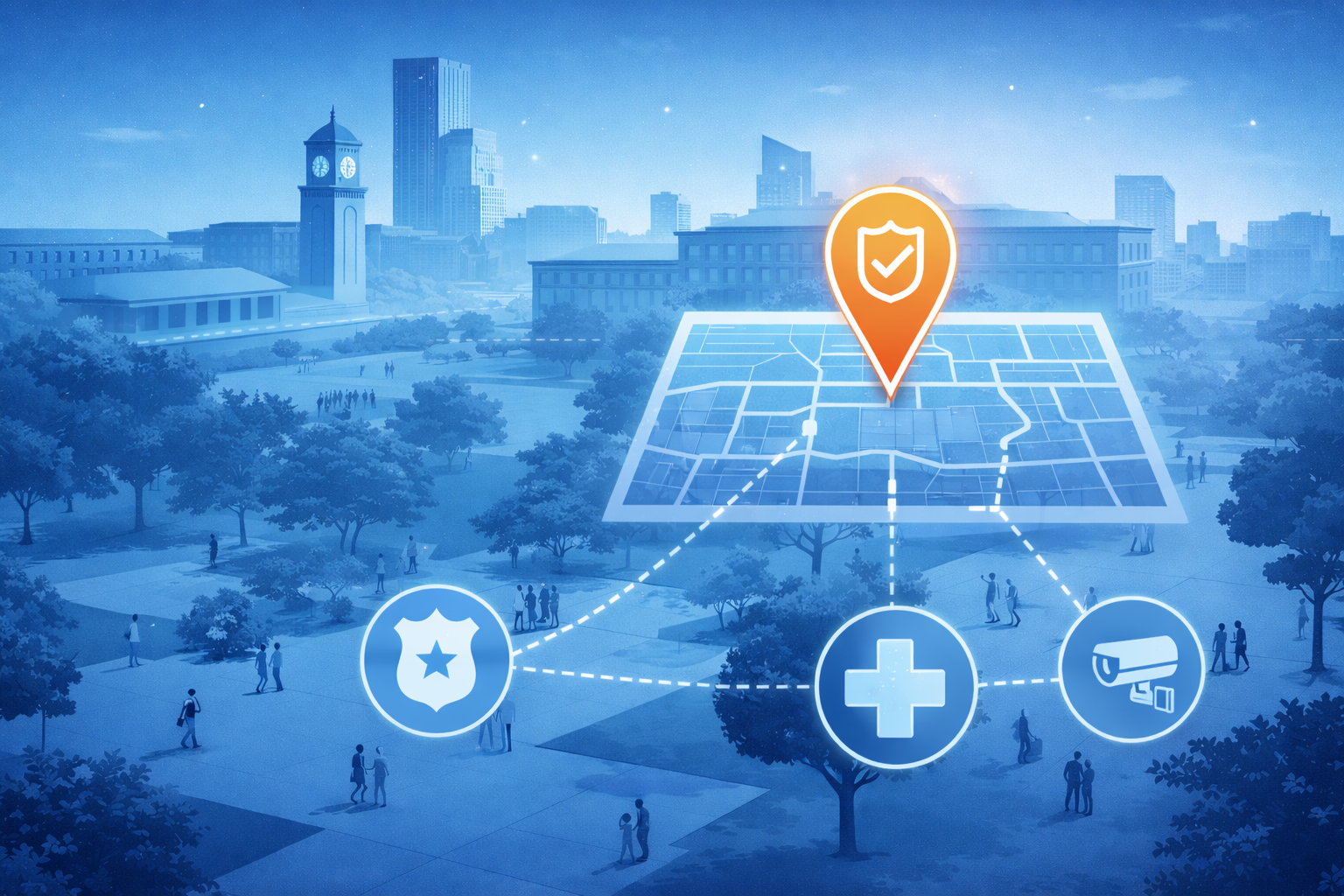
A digital campus safety map provides a real-time, visual representation of the environment officers are responsible for protecting. Instead of relying on static knowledge or verbal descriptions, safety teams can see buildings, access points, emergency resources, and reported incidents layered onto a single interface.
This level of visibility becomes especially important in large or complex campuses where navigation can be challenging. When an incident is reported, officers can quickly pinpoint the exact location and determine the most efficient route to respond. This reduces response times and eliminates confusion, particularly in high-pressure situations.
Want real-time visibility across your entire campus?
See how it works
Identifying Patterns and High-Risk Areas
Beyond navigation, campus safety mapping tools allow officers to identify patterns that are not immediately obvious through individual reports. By visualizing where incidents occur over time, safety teams can detect clusters of activity and areas that may require additional attention.
For example, if multiple reports originate from a specific parking structure or pathway, that area can be flagged as higher risk. Officers can then adjust patrol routes, increase visibility, or coordinate with facilities teams to improve lighting and infrastructure.
Proactive Risk Management with Geofencing
Location intelligence also enables more proactive safety strategies. Instead of reacting to incidents one at a time, campus safety teams can anticipate where issues are likely to occur and take preventive action.
Geofencing capabilities further enhance this approach. Administrators can define specific areas on campus and trigger targeted alerts when conditions change. For instance, if a construction zone creates a temporary hazard, or if severe weather impacts a portion of campus, notifications can be sent only to individuals in or near that area.
This targeted communication ensures relevance while reducing unnecessary alerts for the broader campus population. It also helps students and staff make better decisions based on their immediate surroundings.
Operational Coordination Across Teams
From an operational standpoint, these tools improve coordination across safety teams by giving everyone access to the same real-time visual information.
Key operational advantages include:
- Shared visibility between dispatch, officers, and command staff
- Faster decision-making based on real-time location data
- Reduced miscommunication during active incidents
- More efficient deployment of personnel and resources
This alignment ensures that all teams are working from the same understanding of the situation, which is critical during time-sensitive events.
Real-Time Incident Management
In active situations, location intelligence becomes even more valuable. Officers can track the movement of an incident, monitor updates in real time, and adjust their response as new information becomes available. This dynamic awareness improves both officer safety and overall incident outcomes.
Integrated Reporting and Mapping
Another important benefit is the ability to integrate mapping with reporting and communication systems. When a tip or alert is submitted, it can automatically populate on the map, giving officers immediate geographic context. This creates a seamless flow from reporting to response.
Data-Driven Decision Making
Over time, the accumulation of location-based data strengthens institutional awareness. Leadership can review trends, evaluate the effectiveness of safety measures, and make informed decisions about resource allocation.
For campus safety officers, the impact is clear. Mapping and location intelligence tools provide:
- Faster navigation and response during incidents
- Improved identification of high-risk areas
- More strategic patrol planning
- Better coordination across teams
Final Takeaway
These capabilities shift campus safety from reactive operations to proactive management. Officers are no longer limited to responding after an incident occurs. They are equipped to anticipate risk, deploy resources effectively, and create safer environments across campus.
Ultimately, campus safety mapping and location intelligence transform how institutions understand and manage safety. By combining real-time visibility with historical insight, these tools enable faster response, smarter prevention, and a more coordinated approach to protecting the campus community.
See your campus safety landscape in real time.
Discover how Lightspeed gives your team the visibility to respond faster and prevent incidents before they escalate.
Request a demo