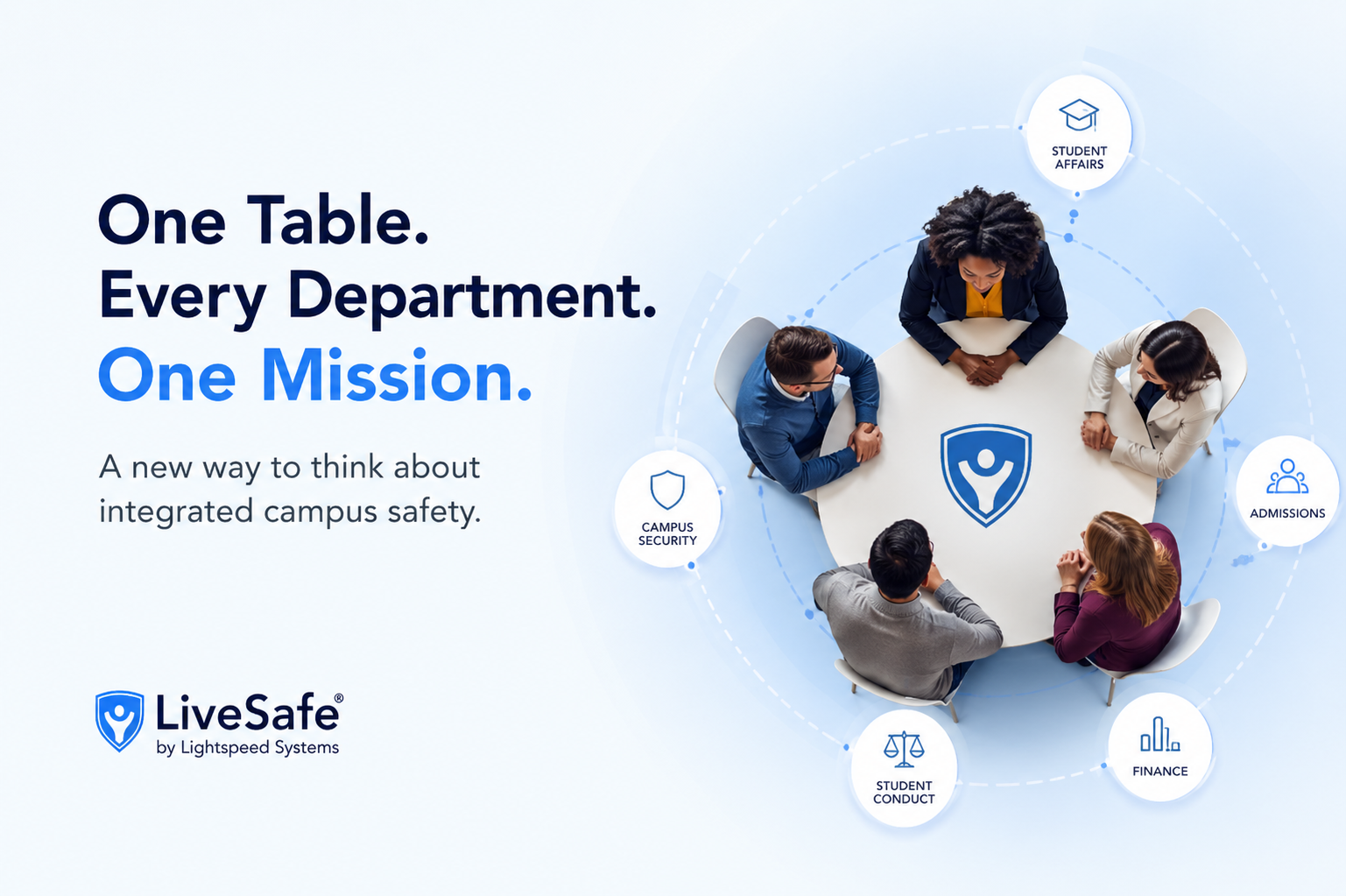
A new way to think about campus safety
It is a Tuesday evening in October. Nothing about it feels unusual.
A junior named Marcus has been struggling. His RA noticed he stopped showing up to floor events a few weeks ago. His academic advisor flagged missed classes and sent a routine email that never got a reply. Two friends mentioned in a group chat that something felt off, but neither knew what to do with that feeling.
By Tuesday night, something escalates. By Wednesday morning, the campus is in crisis mode.
When teams look back, the same pattern almost always emerges. The warning signs were there. The information existed. It just never reached the people who could act on it.
It lived in separate systems, inboxes, and conversations that were never designed to connect.
The problem is not awareness. It is infrastructure.
Now imagine a different version of that same Tuesday.
Not a perfect campus. Not perfect people. Just a campus built to connect the dots earlier.
This is not a hypothetical scenario. It is a question of infrastructure. And answering it requires every department to be part of the same conversation.
What Tuesday looks like from each seat
Campus security
What if your team could see patterns before they become incidents?
Three small concerns in a residence hall over ten days might not trigger action on their own. Together, they tell a story. On most campuses, that story stays hidden until it is too late.
Disconnected reporting channels make it difficult to spot patterns early. Integrated systems make those patterns visible in time to act.
Student affairs
What if early concerns had a clear place to go?
RAs and student affairs professionals often sense when something is off long before it becomes a formal issue. The challenge is not recognition. It is what happens next.
Without a simple, trusted way to share concerns, important signals are delayed or lost entirely.
Student conduct
What if you could see the full picture earlier?
A student who becomes a case in November often showed warning signs in September. Those signals may exist across advising notes, residence life observations, and anonymous tips.
When those pieces stay disconnected, the timeline shortens. When they come together, intervention can happen sooner.
There is also a compliance reality. Documentation that lives in silos weakens an institution’s ability to demonstrate due diligence under Title IX and the Clery Act.
Administrators
What if you could show your safety approach, not just describe it?
Families are asking more direct questions about campus safety. They want something concrete.
A visible reporting platform and a clear response process give admissions teams something real to demonstrate. That matters in a decision process where trust plays a major role.
Overview
Campus safety is not owned by a single team. It is experienced differently depending on where you sit. After a crisis, the financial impact becomes clear very quickly. Legal exposure, staff time, enrollment impact, and external reviews all add up.
Before a crisis, those risks are harder to quantify. But they are still there.
When safety is treated only as a budget line, its value stays hidden. When risk and efficiency are made visible, the conversation changes.
The better version of Tuesday
Let’s return to Marcus. Not the crisis version. The other one.
In this version, the RA logs a concern through a simple reporting tool. It reaches the right teams quickly. A pattern begins to take shape. Someone notices his name appearing more than once.
Outreach happens the next day. Not a generic email. A real conversation.
An intervention follows. Quiet. Direct. Effective.
Tuesday evening passes without incident. No reports. No crisis response. No headlines.
Just a system working the way it should.
What integrated safety actually delivers
When campus safety systems work together, five things become possible:
- Early signals are captured instead of missed
- Patterns are visible instead of scattered
- Documentation is complete and defensible
- Students trust the reporting process
- Financial risk becomes measurable
These outcomes are difficult to achieve with disconnected tools and processes.
Where LiveSafe fits in
Every gap in this story points to the same need: connected, real time infrastructure.
LiveSafe is designed to bring those pieces together.
Students can report concerns through a channel that feels safe and approachable. Teams can communicate back without exposing identities. Information flows into a shared view so patterns can be recognized early.
Title IX and Clery reporting are centralized and time stamped. Documentation is consistent and accessible. Admissions teams can show families exactly how safety works on campus.
For leadership, the impact becomes easier to measure. Faster response times, fewer gaps, and clearer data all contribute to stronger decision making.
One table. One shared mission.
Every institution will face moments that test its systems.
The difference is not whether signals exist. It is whether those signals connect in time to matter.
The campuses that get this right are not relying on chance. They are building infrastructure that brings every department to the same table.
Because the goal is simple.
Make sure the better version of Tuesday is the one that happens.
Learn more about LiveSafe by Lightspeed Systems
https://www.lightspeedcampus.com/livesafe
